
Everything you need to know about moving to Managed Payroll
Payroll & Reward How to Choose a Payroll Provider: Evaluation ChecklistPayroll & Reward
 PBIK Explained: What Employers Need to KnowCompliance & Regulations
 How can AI help with payroll, now and in the future?Payroll & Reward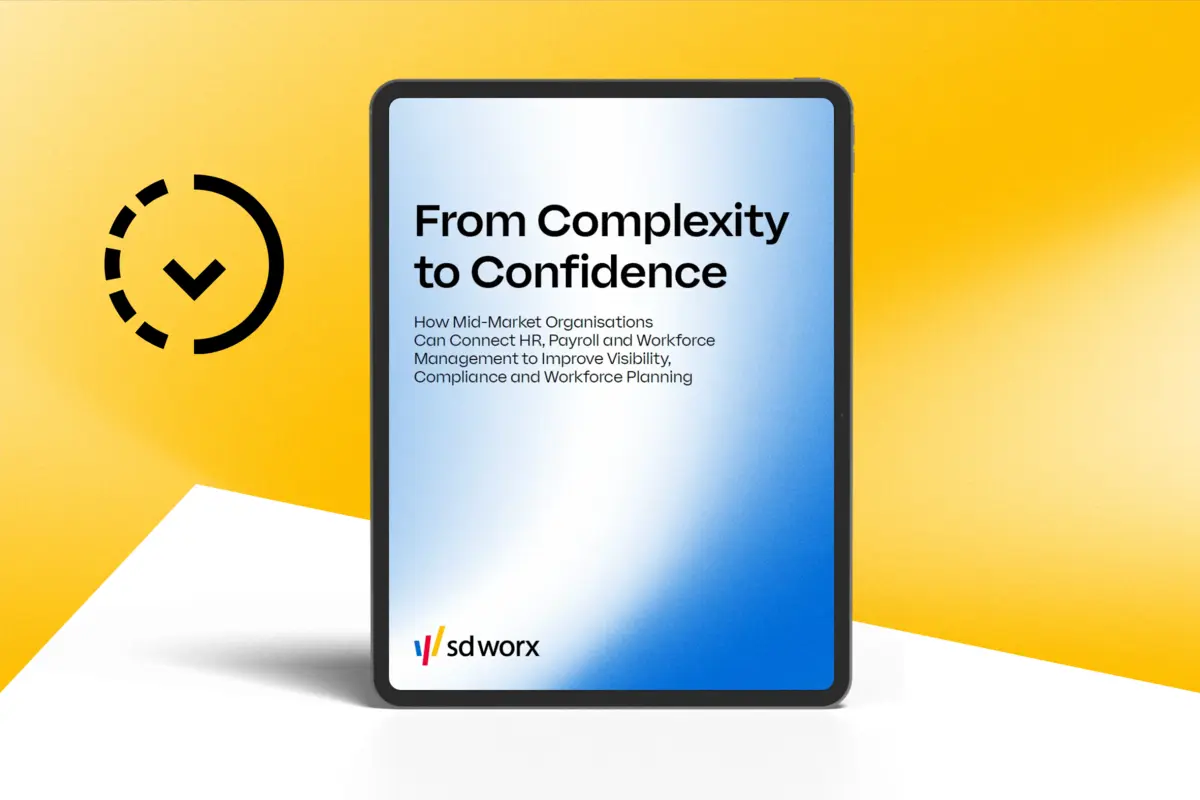
How Mid-Market Organisations Are Connecting HR, Payroll and Workforce Management for Better Business Outcomes
Complete the form to access your free copy and gain exclusive insights from the SD Worx HR & Payroll Pulse 2026 research and discover how connected workforce operations can help your organisation simplify complexity and build confidence for the future.

HR Is Becoming more Strategic. Are Your Systems Keeping Up?
HR's role is changing.
According to the latest SD Worx HR & Payroll Pulse research, 68% of organisations now see HR as part of strategic decision-making, while workforce planning has become a critical or high priority for nearly 60%. HR leaders are increasingly expected to support business growth, shape workforce strategy and provide greater insight into organisational performance.
The challenge is that many organisations are still trying to support these strategic objectives using disconnected systems, fragmented workforce data and manual processes.

Download your free payroll & HR RFP template
Is your organisation looking to change HR and or payroll providers, or thinking of starting a new transformation project? Our simple to use RFP (Request For Proposal) template contains all the relevant questions you need to ask, to help your team analyse and compare providers.
The template includes 250+ questions to help you design a clear and effective supplier evaluation process, and can be personalised to ensure it is relevant to your project needs.

The Employee Lifecycle Is Broken & Technology Can Help Fix It
Most organisations think about recruitment, onboarding, performance and retention as separate processes.
Employees experience them differently.
To them, every interaction with the organisation is part of a single journey. When those experiences feel disconnected, employees notice. When they feel joined up, engagement, productivity and retention all benefit.
At a time when employee wellbeing, retention, recruitment and employee experience remain among the biggest priorities for HR leaders, creating a more connected employee journey has become increasingly important.

Disconnected Systems Are Holding UK HR Teams Back
HR has become a strategic function. According to the latest SD Worx HR & Payroll Pulse research, 68% of organisations now see HR as part of strategic decision-making, while workforce planning, employee experience, compliance and retention continue to climb the agenda. Yet many HR departments are still expected to deliver against these priorities using disconnected systems, fragmented data and manual processes across different HR, payroll, and workforce management platforms.
The result is not simply inefficiency. This lack of integration leads to inefficiencies, reduced visibility, and less confidence in critical workforce decisions.

The state of HR and payroll in Europe: The top 10 challenges for 2026
HR and payroll functions in Europe are under increasing pressure from talent shortages, rising costs, regulation and AI. Drawing on insights from the 2026 HR and Payroll Pulse, this blog examines the ten most pressing HR challenges organisations face in 2026.

Equipping HR for the future of work: Europe’s workforce planning trends in 2026
Workforce planning has become a priority for European organisations facing rising costs, talent shortages and increasing automation. Drawing on insights from the 2026 HR and Payroll Pulse, this blog examines the most urgent workforce planning trends in 2026 and where HR teams remain underprepared.

What employees want: A reward guide to increasing employee satisfaction in 2026
Employee satisfaction in 2026 is closely linked to how organisations approach reward, recognition and financial well-being. Drawing on findings from the 2026 HR and Payroll Pulse, this blog explores what employees across Europe value most and where gaps remain. It outlines how clearer, more flexible reward strategies can better support people at work.

AI in the European workplace in 2026: Expert insights on the future of AI in HR
AI adoption in the European workplace is accelerating, but many organisations struggle to turn experimentation into lasting impact. In this interview, Professor Jason Pridmore shares insights on how AI is reshaping HR, payroll and the nature of work, drawing on findings from the 2026 HR and Payroll Pulse. The article explores trust, skills and the role HR can play in guiding responsible AI use

More than just admin: 5 payroll trends for defining HR strategies in Europe in 2026
Payroll is becoming more closely connected to how organisations manage people, data and trust. This blog explores five key payroll trends for 2026, drawing on insights from the 2026 HR and Payroll Pulse and SD Worx expertise. It outlines what HR teams across Europe should consider when shaping future payroll strategies.

How Mid-Market Organisations Are Simplifying HR and Payroll with SD Worx
Mid-market organisations across the UK and Europe face similar challenges. As they grow, HR and payroll processes become more complex, systems become fragmented and teams spend increasing amounts of time managing administration rather than focusing on people.

The ROI of Connected HR, Payroll and Workforce Management
When organisations evaluate HR technology, the first question is often simple:
What's the return on investment?
The answer often goes far beyond software savings. The biggest returns typically come from reducing inefficiency, improving workforce visibility and eliminating the risks created when HR, payroll and workforce management systems fail to work together.